Gideon Levy :Incatenato, picchiato, appeso a un albero: adolescente palestinese brutalmente aggredito dai coloni
Gideon Levy
30 agosto 2021 – Chronique de Palestine
Tareq Zubeidi è disteso sul suo letto di ferro in un angolo della stanza debolmente illuminata, coperto fino al collo e con gli occhi fissi al soffitto. Questo ragazzo pallido di 15 anni, senza barba, ha un sorriso dolce e parla con un sussurro.
Se inavvertitamente gli si toccano le gambe, soprattutto le ginocchia, si solleva di scatto come morso da un serpente e il suo viso si sbianca dal dolore.
Sulla pianta dei piedi ha due grosse cicatrici rotonde, il che spiega perché non gli sia possibile stare in piedi. Quando i coloni gli hanno inflitto queste ferite aveva il viso coperto, ma è convinto che una di esse sia stata provocata da una bruciatura, probabilmente con un accendino tenuto sotto un piede fino a che la carne si è strinata, mentre sull’altro piede lo colpivano con una sbarra di ferro.
Tareq è costretto a letto da quel mattino di orrore ed è ancora traumatizzato da quell’evento.
Il villaggio di Silat al-Daher si trova sulla strada tra Nablus e Jenin, nel nord della Cisgiordania. E’sovrastato dall’alto di una collina dai resti della colonia di Homesh, destinata ad essere evacuata, che Israele ha smantellato in teoria nel quadro del processo detto di disimpegno del 2005.
Nel contempo l’Alta Corte di Giustizia ha ordinato allo Stato di annullare le ordinanze militari di sequestro e di chiusura che avevano vietato ai palestinesi di accedere al sito, ma tutto ciò non ha niente a che fare con la realtà.
Un gruppo chiamato “Homesh First” [Prima Homesh] ha creato una yeshiva (scuola religiosa ebraica) sul sito poco dopo le evacuazioni; i suoi studenti sono tra i coloni più violenti. Chiunque abbia provato ad avvicinarsi a Homesh sa di che cosa – e soprattutto di chi – si tratta.
La decisione dell’Alta Corte qui è stata da molto tempo calpestata e nessuno se ne preoccupa. Da marzo 2020 l’organizzazione israeliana di difesa dei diritti umani B’Tselem ha registrato non meno di sette aggressioni violente contro palestinesi da parte dei coloni della yeshiva di Homesh.
In un’occasione hanno aggredito un gruppo di donne e un neonato, in un’altra hanno picchiato un contadino con bastoni e pietre, in una terza hanno rotto una gamba ad un pastore con delle pietre, e per due volte hanno attaccato case e veicoli nella periferia del villaggio.
Malgrado ciò, la scorsa settimana, il 17 agosto, un gruppo di giovani di Silat al-Daher ha deciso di organizzare un picnic e una grigliata vicino a Homesh, nel boschetto che costituisce il polmone verde del villaggio.
Secondo quanto ci ha raccontato Tareq – aveva già raccontato i fatti a Abdulkarim Sadi, ricercatore sul campo di B’Tselem, che lo ha incontrato il giorno dopo l’incidente ed è rimasto sconvolto dal trauma subito dal ragazzo – quel giorno il tutto è cominciato verso le 9, quando i giovani si sono incontrati davanti al liceo locale, dove il nuovo anno scolastico era iniziato un giorno prima.
Dei sei adolescenti, alcuni avevano lasciato la scuola ed altri avevano deciso di saltare un giorno di lezione a inizio anno. Tareq ha lasciato la scuola al settimo anno, quando aveva 13 anni, ed è andato a lavorare in una panetteria del villaggio di proprietà di suo zio.
Dopo aver comprato della carne di tacchino, sono saliti sulla collina a piedi. La strada per le auto è bloccata a causa dei coloni di Homesh che non lasciano avvicinarsi nessun palestinese.
Poco dopo essere arrivati al sito, dove si sono seduti sotto un albero a chiacchierare, il gruppo ha sentito d’improvviso delle voci in ebraico. Tareq si ricorda che lui e i suoi amici hanno subito avuto paura. A qualche decina di metri da loro è comparsa una macchina grigia argentata, con dentro quattro coloni, seguiti da due altri a piedi.
Solo qualche centinaio di metri separava il luogo del picnic da ciò che era Homesh, con la sua grande cisterna – suo segno di riconoscimento – che non era stata demolita al momento dell’evacuazione nel 2005.
I ragazzi si sono immediatamente alzati e si sono messi a correre per salvarsi la vita. Ogni idea di picnic era svanita. Ma durante la salita Tarek si era ferito ad una gamba e non poteva muoversi rapidamente.
La macchina lo ha seguito a tutta velocità, poi lo ha urtato e fatto cadere. I quattro coloni sono usciti dalla vettura e hanno cominciato a picchiarlo su tutto il corpo insultandolo. Avevano in testa grandi kippa [zucchetto rituale ebraico tipico dei coloni, ndtr.] e lunghi riccioli, racconta.
Uno di loro è tornato alla macchina per prendere una corda con la quale poi gli hanno legato le mani dietro la schiena ed anche le gambe. Tarek gridava di paura e di dolore. I coloni gli hanno dato dei calci, dice, mentre era steso a terra immobile.
Poi lo hanno sollevato e messo sul cofano della macchina, legandolo al veicolo con una catena di ferro perché non cadesse. La macchina ha viaggiato per qualche minuto finché ha raggiunto lo stagno di Homesh.
Il guidatore ha frenato bruscamente e Tarek è caduto, perché lungo il percorso i coloni avevano sganciato la catena. Due autobus di coloni sono arrivati al sito, ricorda Tarek, ma non è sicuro che abbiano preso parte alle violenze.
Qualcuno gli ha spruzzato sul viso dello spray urticante, un altro gli ha dato ancora dei calci. Steso al suolo, era sicuro che stesse per essere ucciso. Altri coloni si sono messi a prenderlo a calci, poi gli hanno bendato gli occhi con un fazzoletto. Tarek ha sentito che gli sputavano addosso e una raffica di insulti e di oscenità.
“È stata un’esperienza orribile e terrificante”, dice, aggiungendo che pensa di essere rimasto steso così per circa un’ora e mezza.
Poi i coloni lo hanno trascinato fino a un albero e l’hanno appeso per le mani, in modo che le gambe rimanessero sospese. Con un’altra corda hanno legato il suo corpo al tronco dell’albero. Pensa di essere rimasto in quella posizione per circa cinque minuti. “Proprio in quel momento ho sentito che un colono mi picchiava la pianta di un piede con una sbarra di ferro ed un altro teneva qualcosa che bruciava sotto l’altro piede.”
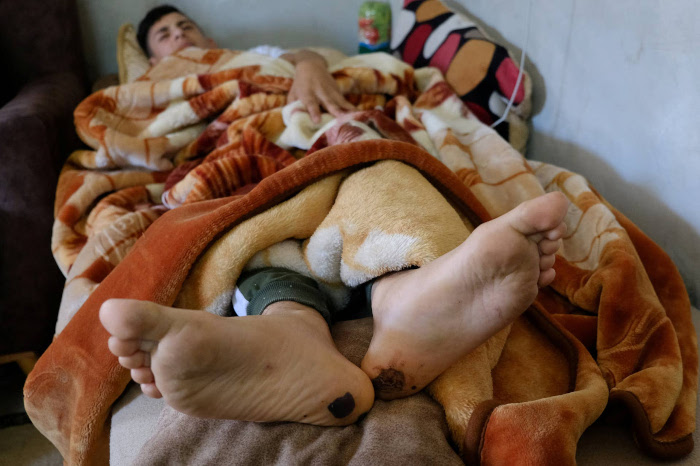
Le cicatrici nei piedi di Tareq dovute alla tortura subita. Foto Alex Novac
Tareq ci mostra le ferite alle piante dei piedi. Dice di aver pianto e gridato per tutto il tempo e che i coloni non hanno mai smesso di insultarlo. Quando lo hanno staccato dall’albero, uno degli aggressori lo ha colpito alla testa con una mazza. Uno di loro gli gridava: “Sono pazzo, sono pazzo.” Tarek ha perso conoscenza.
Quando è rinvenuto si è ritrovato su una jeep dell’esercito israeliano. Un soldato gli ha dato il suo telefono cellulare perché potesse parlare con qualcuno in arabo, forse un agente dei servizi di sicurezza dello Shin Bet [servizi interni israeliani, ndtr.], che lo ha minacciato di fare arrestare i ragazzi se ci fossero stati lanci di pietre nel villaggio.
I soldati hanno chiesto la carta di identità di Tarek – lui ha risposto che era ancora troppo giovane per averne una.
Questa settimana l’unità del portavoce delle forze israeliane ha pubblicato su Haaretz il seguente comunicato riguardo all’incidente: “Martedì 17 agosto abbiamo ricevuto un rapporto relativo a palestinesi che hanno lanciato pietre contro dei coloni vicino alla colonia evacuata di Homesh, che si trova nel settore della brigata territoriale di Shomron (Samaria). Dopo aver ricevuto il rapporto, dei soldati dell’IDF (esercito israeliano, ndtr.) hanno raggiunto il sito ed hanno trovato dei coloni che tormentavano un giovane palestinese. Il comandante della forza si è occupato dell’accaduto ed ha riportato il giovane palestinese alla sua famiglia.”
Immediatamente dopo l’inizio dell’incidente, i cinque amici di Tarek hanno raggiunto Silat al-Daher ed hanno detto alla sua famiglia che lui era rimasto indietro. Suo fratello maggiore Hisham e suo zio Murwah si sono precipitati all’incrocio che si trova all’entrata di Homesh, ma hanno avuto paura di avventurarsi in macchina sulla strada che porta alla colonia.
Dopo un po’ di tempo hanno visto un ufficiale dell’IDF, lo hanno chiamato e gli hanno raccontato che cosa era successo. Poco dopo, una jeep dell’IDF gli ha riportato Tarek ferito. Un’ambulanza palestinese che passava sull’autostrada con un paziente uscito dall’ospedale di Nablus si è fermata e il paziente, che stava bene, ha proposto che l’ambulanza caricasse Tarek al suo posto. Tarek, con suo fratello e suo zio, è stato portato all’ospedale pubblico Khalil Suleiman di Jenin.
Secondo la cartella clinica dell’ospedale vi è arrivato alle 13,03, è stato sottoposto ad una serie di esami ed è stato riportato a casa il giorno successivo. Le ferite fisiche erano meno gravi di quanto sembrasse inizialmente, ma la ferita psicologica era chiaramente più grave.
Tarek racconta che dopo quel giorno non ha potuto dormire e che si sente molto angosciato, soprattutto al buio. Suo fratello e suo zio dormono nella stanza con lui.
“Se resto solo al buio comincio a pensare a quell’incubo con i coloni. Ho l’impressione di sudare in tutto il corpo. Ho la sensazione che il mio cuore batta all’impazzata.”
Da allora Tarek non può camminare senza aiuto – lo accompagnano al bagno i suoi familiari. La pianta dei piedi è ferita e le sue ginocchia sono ancora gonfie.
Gideon Levy, nato nel 1955 a Tel Aviv, è un giornalista israeliano e membro della direzione del quotidiano Haaretz. Vive nei territori palestinesi sotto occupazione. Ha ricevuto il premio Euro-Med Journalist nel 2008, il premio Leipzig Freedom nel 2001, il premio Israeli Journalists’Union nel 1997 ed il premio dell’Associazione dei Diritti Umani in Israele nel 1996. Ha scritto il libro The Punishment of Gaza [‘La punizione di Gaza’], che è stato tradotto in francese con il titolo Gaza, articoli per Haaretz, 2006-2009 [Gaza, articoli per Haaretz, 2006-2009], La Fabrique, 2009.
(Traduzione dal francese di Cristiana Cavagna)

Commenti
Posta un commento