Ex capo dello Shin Bet :" Il governo sta portando Israele in un vicolo cieco "

 TAG: Stato Palestinese o realtà virtuale?

Sintesi personale 

Un ex capo dello Shin Bet sta avvertendo   che il governo  porterà Israele in un vicolo cieco.Questo consiglio  a ogni giovane israeliano: non dare per scontato che un leader si preoccupi di fare la cosa giusta; le decisioni sono spesso motivate dalla volontà di rimanere al potere e non da ciò che è meglio per Israele ", ha scritto  Ami Ayalon, nel suo libro  di memorie, Friendly Fire.

Ayalon ha lavorato con tre primi ministri -  Benjamin Netanyahu , Ehud Barak e Shimon Peres e ha  anche incontrato gli ex primi ministri Yitzhak Rabin ed Ehud Olmert.Ayalon ha molto da dire su Netanyahu, in particolare sul processo decisionale del primo ministro sotto pressione:

"Netanyahu si sente in trappola . In tutti questi anni è stato più un politico che uno statista, ma ora ha perso completamente l'equilibrio. Farà qualsiasi cosa  senza argine ,pur di continuare il suo governo . Quando Olmert   è stato condannato  e Netanyahu è diventato primo ministro [per la seconda volta nel 2009], era chiaro per me che avrebbe fatto di tutto per dimostrare che non c'è nessuno con cui parlare e niente di cui parlare   nei colloqui di pace con i  palestinesi  .Israele deve ancora trovare un modo per convivere con i suoi vicini palestinesi."

Il titolo del suo libro, Friendly Fire, scaturisce dalla convinzione che "il nostro peggior nemico non non è costituito dagli iraniani, dagli Hezbollah, da Hamas o dalla Jihad islamica .La nostra principale minaccia, il nostro peggior nemico è costituito da noi stessi.  Inequivocabilmente la pace e la sicurezza sono intrecciate La cooperazione in materia di sicurezza con i palestinesi è stata la chiave per combattere il terrorismo, e questa cooperazione è stata possibile solo nel contesto della genuina speranza, tra il pubblico palestinese ,che la nostra occupazione sarebbe finita".

Se Israele non si manterrà come uno stato ebraico e democratico, ciò significherà la fine del sionismo, e "questo è ciò che stiamo facendo giorno dopo giorno da diversi anni “.Durante i suoi molti anni nello Shin Bet , Ayalon ha stretto rapporti con la comunità araba,imparando a vedere i palestinesi come persone e non come terroristi."La lezione più preziosa che ho imparato è stata quella di considerare i palestinesi come persone, non come obiettivi. Usano il terrorismo più della maggior parte degli israeliani , ma non stiamo più combattendo il terrore. Stiamo combattendo il popolo palestinese. Non ci conquisteranno, mai, ma il modo in cui li stiamo combattendo sta ponendo fine al sionismo .

Nel capitolo 22 introduce il lettore alla formazione dell'iniziativa People's Voice (anno 2002).

"La nostra strategia era quella di voler cambiare la narrativa del conflitto portando la diplomazia fuori dalle stanze fumose . I sondaggi all'epoca mostravano che israeliani e palestinesi erano pronti per la pace.. Il settanta per cento da entrambe le parti voleva una soluzione a due stati, il numero più alto mai registrato nella storia. Eppure, queste stesse persone chiedevano sangue " . Ha raccontato come lui e Nusseibeh avessero picchettato le strade per trovare un gruppo eterogeneo di seguaci che li sostenesse. Alla fine, nell'ottobre di quell'anno, 90.000 persone si erano iscritte e ogni mese se ne aggiungevano altre 20.000.

Ha riassunto il suo messaggio come segue: "Abbiamo bisogno di una soluzione a due stati non perché ci piacciono i palestinesi o pensiamo che Arafat meriti uno stato, ma perché se non ci ritiriamo dal territorio palestinese e riconosciamo il loro diritto ad avere un proprio stato, Israele non può sopravvivere come democrazia ebraica. La continuazione dell'occupazione porterà inevitabilmente a un unico stato e alla fine del sionismo come lo conosciamo ".Tuttavia, quasi 20 anni dopo, non c'è ancora pace.

"Per la prima volta nella storia, gli ebrei hanno il potere di plasmare il proprio futuro e tracciare il futuro,dobbiamo cambiare la comprensione del nostro passato  per ridisegnare la nostra narrativa . La lettura del passato costituisce una barriera al vero compromesso perché controlla le nostre azioni e caratteristiche e,quindi,il nostro futuro. Noi israeliani potremmo aver bisogno ancora di qualche anno in più di governo di destra, di attacchi a Gaza , della stretta sempre più soffocante sulla società civile prima di renderci finalmente conto che stiamo vivendo in una società dispotica , tirannica per coloro che sono sotto il nostro stivale, tossica e controproducenti per tutti .Se un numero sufficiente di persone si dedica alla pace,potremmo avere la  pace".


Although the book is termed a memoir, it is about the author only “to the extent my life mirrors much of what has happened in Israel over the past 70 or so years,

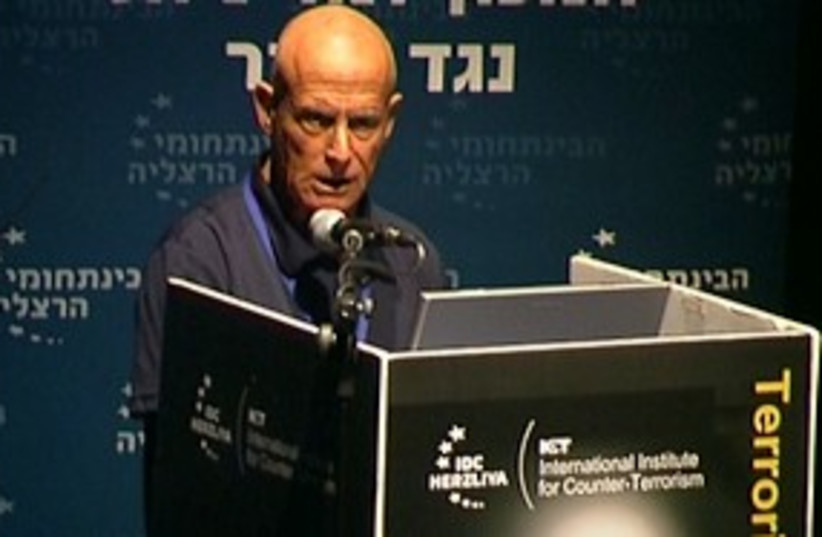
Ami ayalon (photo credit: Benjamin Spier)
Ami ayalon
(photo credit: Benjamin Spier)
A former head of the Shin Bet (Israel Security Agency) is warning the public that the government of Israel is leading a policy that will take it to a dead end.
“This is my advice to every Israeli youngster: Don’t assume that a leader cares about doing the right thing; their decisions are often motivated by staying in power and not what is best for Israel,” said Ami Ayalon, whose memoir, Friendly Fire, was published on Monday.
Although the book is termed a memoir, it is about the author only “to the extent my life mirrors much of what has happened in Israel over the past 70 or so years,” he explained. It’s “about my personal involvement combating terrorism – battles fought, men killed, friends buried and attacks thwarted – and... the importance of hope.”
Ayalon answered to three prime ministers –  Benjamin Netanyahu, Ehud Barak and Shimon Peres – during his nearly five years as director of the Shin Bet. He also met with former prime ministers Yitzhak Rabin and Ehud Olmert.
Ayalon has a lot to say about Netanyahu, particularly the prime minister’s decision-making under pressure, motivations, election, annexation moves and response to protests.
“Netanyahu feels trapped,” he said. “For all these years, he was more a politician than a statesman, but now he has lost the balance completely. He will do almost anything, without boundaries, to continue his rule.”
But mostly, Ayalon told The Jerusalem Post, “When Olmert found himself in jail and Netanyahu became prime minister [for the second time in 2009], it was clear to me that he would do everything to prove there is no one to talk to and nothing to talk about” when it comes to the Palestinian peace talks.
A self-described “proud minority – and I am not ashamed of it,” Ayalon said he believes that Israel still must find a way to coexist with its Palestinian neighbors.
The title of his book, Friendly Fire, is because he thinks “our worst enemy is not the Iranians, Hezbollah, Hamas or Islamic Jihad,” he told the Post. “Our main threat, our worst enemy is ourselves.”
Ayalon “told three prime ministers unequivocally that peace and security were intertwined,” he related in his book. “Security cooperation with the Palestinians was key to combating terror, and this cooperation was only possible in the context of genuine hope among the Palestinian public that our occupation would end.”
If Israel does not maintain itself as a Jewish and democratic state, that will mean the end of Zionism, and “this is what we are doing day by day for several years – it is only because of us,” he said.
Through his many years in the Shin Bet fighting Palestinian terrorists, Ayalon formed relationships with the Arab community. He said he learned to see the Palestinians as people and not as terrorists.
“The most valuable lesson I had learned,” Ayalon wrote in his book, is “seeing Palestinians as people, not targets.”
“They use terror more than most Israelis – I know,” he told the Post. “That’s what I did – fought Palestinian terror. But we are no longer fighting terror. We are fighting the Palestinian people. They will not win over us – never. But the way we are fighting them is bringing an end to Zionism.”
In Ayalon’s mind, the settlers are “the vanguard of frontier Zionism... a latter-day version of the kibbutzniks like my parents, who forged Israel’s settlement and security ethos.”
Deeply Jewish in its delivery, the book opens many chapters with quotes from Jewish books or scholars.
“What is hateful to you do not do to your neighbor,” begins chapter 22 with a quote by Rabbi Hillel. “This is the whole Torah; all the rest is commentary.”
Ayalon is a former Shayetet 13 commando, commander of the navy, cabinet minister, Knesset member and a recipient of the Medal of Valor, Israel’s highest military decoration.
With Sari Nusseibeh, former Palestinian National Authority representative in Jerusalem, he established the People’s Voice peace initiative to help advance peace between Israel and the Palestinians.
He is also a member of Commanders for Israel’s Security, chairman of the Executive Committee of the Haifa Research Center for Maritime & Strategy and chairman of AKIM Israel (the National Association for People with Intellectual Disabilities and their Families).
Finally, he organized and was featured in the Academy Award-nominated documentary The Gatekeepers.
In Chapter 22, he introduces the reader to the formation of the People’s Voice initiative.
“Our strategy... had been to change the narrative of the conflict by taking diplomacy out of the smoky back rooms and into the streets,” Ayalon wrote regarding the situation in 2002. “The question now was how to get the public to take notice of our proposal.”
He explained how polls at the time showed that average Israelis and Palestinians were ready for peace. “Seventy percent on both sides wanted a two-state solution, the highest number in recorded history. Yet, these same people were calling for blood,” Ayalon wrote.
He told how he and Nusseibeh picketed the streets to find a diverse group of followers to support them. Ultimately, by October of that year, 90,000 people had signed on and each month another 20,000.
He boiled down his message as follows: “We need a two-state solution not because we like Palestinians or we think Arafat deserves a state, but because if we don’t withdraw from Palestinian territory and acknowledge their right to have tier own state, Israel cannot survive as a Jewish democracy. Continued occupation would inevitably lead to a single state and end to Zionism as we know it.”
“The narrative we chose centered on the self-interest of Israelis who wanted to sit through lunch without a suicide bomber killing them and of Palestinians who wanted to leave their villages without facing a uniformed teenager barking out orders,” Ayalon wrote.
By 2003, he and Nusseibeh traveled together to share this message with anyone who would listen, including US deputy secretary of defense Paul Wolfowitz and many others.
However, nearly 20 years later, there is still no peace.
“How can a staunch Zionist, who was raised on one of Israel’s earliest settlements and trained as a kill-or-be-killed elite commando, spearhead a campaign for peace with his enemies?” asked Nusseibeh about Ayalon – a question that the Shin Bet head tries to answer in the book.
But Ayalon also strove to convey a message of optimism for a man who has seen so much in his past and does not like what he sees in the present.
For the first time in history, Jews have the power to shape their own future, and they should use it, Ayalon told the Post. However, to chart this future, “we have to change the way we understand our past – to redesign our narrative.”
“The way we understand our history is the barrier to real compromise because it controls our actions and features and therefore our future,” he wrote.
In his conclusion, he writes that maybe “things have to hit rock bottom before a change can occur.”
“The way I see it, we Israelis might need a few more years of right-wing rule, attacks on Gaza and tightening the choke hold on civil society before we finally realize we are living in a dystopian society that is tyrannical for those under our boots, and toxic and self-defeating for all,” he continued.
Yet Ayalon said he hopes this is not the reality: “The whole state of Israel was created as a result of optimism... When Theodore Herzl said, ‘If you will it, it is no dream.’” So many people said he was naive, but we did it, he said.
“If enough people are dedicated to peace, if it is important enough, we could have peace,” Ayalon concluded.
Friendly Fire can be ordered on Amazon here.


JPOST.COM
Although the book is termed a memoir, it is about the author only “to the extent my life mirrors much of what has happened in Israel over the past 70 or so years,

Commenti

Post popolari in questo blog

Hilo Glazer : Nelle Prealpi italiane, gli israeliani stanno creando una comunità di espatriati. Iniziative simili non sono così rare

The New York Times i volti, i nomi, i sogni dei 69 bambini uccisi nel conflitto tra Israele e Hamas

Limes :I CONFINI D’ISRAELE SECONDO LA BIBBIA (cartina)

Amira Hass : The fate of a Palestinian investor who called for Abbas' resignation