Eyal Hareuveni :Apri gli occhi a Hebron e osserva l'intera occupazione

Sintesi personale
I visitatori che si recano per la prima volta nell'antico centro di Hebron potrebbero sentirsi come se fossero entrati nel cuore dell'oscurità . È qui che le politiche dell'occupazione militare israeliana hanno raggiunto l'apice della barbarie: reggimenti di soldati sono schierati per proteggere 700 coloni ebrei che vivono in un'enclave, trasformata in un luogo di collasso urbano, come conseguenza delle misure di sicurezza dell'esercito. I 200.000 palestinesi residenti in città non possono fare nulla per contrastare le misure oppressive che rendono la loro vita quasi insopportabile. A Hebron, l'esercito ha distrutto o sigillato le case dell'era mamelucca che fiancheggiavano la cosiddetta Worshippers Way, , un sentiero riservato esclusivamente ai coloni ebrei per raggiungere la Grotta dei Patriarchi.
A Shuhada Street, un tempo vivace centro commerciale dell'intera Cisgiordania meridionale ,domina il silenzio . I commercianti hanno abbandonato i loro negozi e quasi tutti i residenti se ne sono andati. Né è possibile ignorare le dozzine di checkpoint dotati di tecnologie avanzate come il riconoscimento facciale. Queste fortezze medievali del 21 ° secolo mantengono l'insediamento ebraico separato dal resto di Hebron.
Sono
rimasti alcuni palestinesi, sebbene le loro vite siano controllate e
gestite dalle forze di sicurezza israeliane. Quasi tutti dicono
che lascerebbero
la città fantasma dove Israele
li ha intrappolati molto tempo fa, se potessero. Ogni attività
quotidiana : andare a scuola o al lavoro, visitare e ricevere visite
dalla famiglia, partecipare a eventi familiari, persino fare shopping ,implica fare la fila ai posti di blocco ed essere sottoposti a
trattamenti umilianti.
Soldati,
poliziotti e coloni commettono atti di violenza contro i palestinesi
quasi ogni giorno, con un'impunità quasi totale. I soldati
sottopongono i palestinesi a umilianti perquisizioni, fanno irruzione
nelle loro case nel cuore della notte ed eseguono falsi
arresti. Questi sono tutti aspetti comuni dell'occupazione nel
suo insieme, ma a Hebron sono molto più intensi.
Nel
2007 Hagai Alon, allora aiutante dell'ex ministro della Difesa Amir
Peretz, dichiarò che l'obiettivo di queste politiche era "svuotare
Hebron degli arabi" - in altre parole, sfrattare con la forza la
popolazione civile. Secondo il diritto internazionale
umanitario, il trasferimento forzato di una popolazione civile è un
crimine di guerra.
Il
modello Hebron non è unico. Le forze occupanti usano le stesse
tattiche in tutta la Cisgiordania, in misure diverse ma con lo stesso
obiettivo: l'espropriazione sempre più violenta dei palestinesi
dalle loro case e dalle loro terre. Insediamenti, posti di
blocco e mura si stanno avvicinando ai maggiori centri urbani
palestinesi, così come si trovano in villaggi come Susiya e Khan
al-Ahmar . I
residenti in questi due villaggi particolari stanno anche affrontando
la minaccia di espulsione nel tentativo di costringerli ad andare a
vivere in enclavi più grandi. La stessa cosa sta succedendo
nella Shiloh Valley, il blocco degli insediamenti Talmonim, in tutta
la Valle del Giordano dove
sono sorti avamposti, a Gerusalemme
est ,
intorno a Betlemme e nella Cisgiordania meridionale. In altre
parole,sta
succedendo ovunque .
I
migliori e più brillanti israeliani hanno dato una mano in questa
ingiustizia: giudici della Corte suprema, alti funzionari
dell'establishment militare e della sicurezza, membri dell'avvocatura
militare e della procura e, naturalmente, politici a sinistra e a
destra. Tutti hanno tollerato la violenza, a Hebron e in
qualsiasi altra parte della Cisgiordania. Tutti hanno
legittimato l'espropriazione dei palestinesi e il furto delle loro
proprietà e non solo a Hebron. Tutti hanno sostenuto la
continua oppressione dei palestinesi, anche dopo che gli effetti
atroci di questa politica sono diventati chiari.
Ai
coloni piace dire "Hebron: per sempre",ma Hebron è molto
più di questo: è qui, lì e ovunque. Apri gli occhi a Hebron e
vedrai tutti i territori occupati.
he settlements, checkpoints, and walls that have been the reality for Hebron’s Palestinian population are now being copied everywhere across the West Bank.
By Eyal Hareuveni
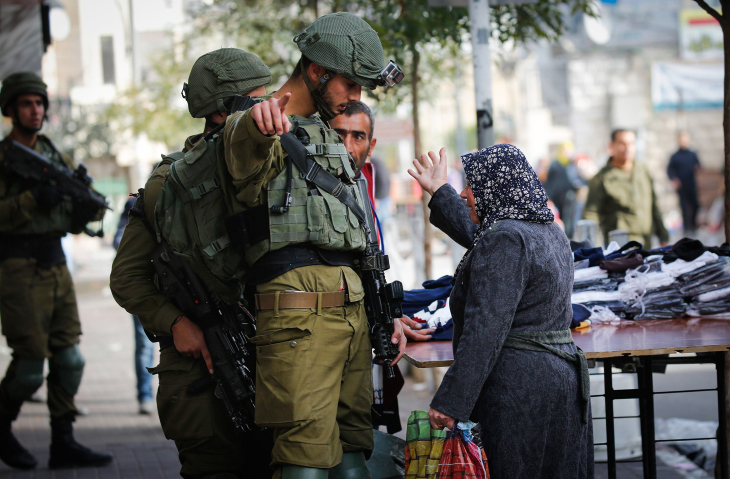
Israeli soldiers argue with a Palestinian woman during clashes at a protest against U.S. President Donald Trump’s decision to recognize Jerusalem as the capital of Israel, Hebron, December 10, 2017. (Wisam Hashlamoun/Flash90)
First-time visitors to the Jewish settlement in Hebron’s ancient city center might feel as though they have stepped into the heart of darkness. This is where the Israeli military occupation’s policies have reached the pinnacle of barbarism: regiments of soldiers are deployed to protect 700 Jewish settlers who live in an enclave that has been turned into a site of urban collapse as a consequence of the army’s security measures. The 200,000 Palestinians residents of the city can do nothing to counter the oppressive measures that make their lives all-but unbearable.
In Hebron, the army has destroyed or sealed the Mamluk-era homes lining the so-called Worshippers Way, a footpath reserved exclusively for Jewish settlers as their route to the Cave of the Patriarchs. Shuhada Street, once the bustling commercial hub of the entire southern West Bank, echoes with silence; merchants have abandoned their shops and nearly all the residents have left. Nor is it possible to ignore the dozens of checkpoints equipped with advanced facial recognition technologies. These 21st century iterations of medieval fortresses keep the Jewish settlement separate from the rest of Hebron.
A few Palestinians have remained, although their lives are controlled and managed by Israeli security forces. Almost all of them say they would have left the ghost town Israel has trapped them in long ago, if only they could. Every daily activity — going to school or work, visiting and receiving visits from family, attending family events, even shopping — involves lining up at checkpoints and being subjected to humiliating treatment.
Soldiers, police officers, and settlers commit acts of violence against Palestinians nearly every day, with near-total impunity. Soldiers subject Palestinians to humiliating searches, raid their homes in the middle of the night, and carry out false arrests. These are all common aspects of the occupation as a whole, but in Hebron they are far more intense.
In 2007, Hagai Alon, then aide to former Defense Minister Amir Peretz, said that the goal of these policies was “to empty Hebron of Arabs” — in other words, to evict the civilian population by force. Under international humanitarian law, the forcible transfer of a civilian population is a war crime.
The Hebron model is not unique. The occupying forces use the same tactics all over the West Bank, in different measures but with the same goal — the increasingly violent dispossession of Palestinians from their homes and lands. Settlements, checkpoints, and walls are closing in on the major Palestinian urban centers, as they are on villages like Susiya and Khan al-Ahmar. Residents in these two particular villages are also facing the threat of expulsion in an effort to force them into larger enclaves. The same thing is happening in the Shiloh Valley, the Talmonim settlement bloc, throughout the Jordan Valley where outposts have been springing up, in East Jerusalem, around Bethlehem, and in the southern West Bank. In other words, it’s happening everywhere.
Israel’s best and brightest have had a hand in this injustice: Supreme Court justices, senior military and security establishment officials, members of the Military Advocate General and the State Attorney’s Office, and, of course, politicians on the left and right. They have all tolerated the violence, in Hebron and everywhere else in the West Bank. They have all legitimized the dispossession of Palestinians and the theft of their property — and not just in Hebron. They have all supported the ongoing oppression of the Palestinians, even after the heinous effects of this policy became clear.
The settlers like to say “Hebron: then and forever.” But Hebron is much more than that: it is here, there and everywhere. Open your eyes in Hebron and you’ll see the whole of the occupied territories.
Eyal Hareuveni is a researcher with B’Tselem. This article was first published in Hebrew on Local Call. Read it here.
Before you go…
A lot of work goes into creating articles like the one you just read. +972 Magazine is nonprofit journalism, owned by many of our writers, editors, and journalists. In order to safeguard that independent voice, we are proud to count you, our readers, as our most important supporters. With your support, we can keep +972 Magazine a strong, independent, and sustainable force helping push the global discourse on Israel/Palestine.
Commenti
Posta un commento