Amiram Goldblum : E se Israele avesse deciso di espellere i coloni di Hebron?

Sintesi personale
Dopo il massacro della Tomba dei patriarchi, il 25 febbraio 1994, quando il colono israeliano Baruch Goldstein uccise 30 fedeli palestinesi e ne ferì altri 120 a Hebron, il primo ministro Yitzhak Rabin si trovò dinanzi a diverse opzioni . La Cisgiordania stava ribollendo e l'establishment della sicurezza prevedeva che i palestinesi avrebbero effettuato attacchi di rappresaglia. Rabin dovette agire rapidamente.Usare la provocazioni per effettuare ritorsioni da parte dei palestinesi è stata una pietra miliare nei metodi dei coloni per espandere il loro controllo. Questa volta - anche secondo sua moglie - l'obiettivo di Goldstein era quello di bloccare gli Accordi di Oslo con un massacro che avrebbe inevitabilmente portato a una risposta devastante.Non era la prima volta: il massacro di Hadassah Convoy, dove le forze arabe uccisero 77 medici e infermieri ebrei il 13 aprile 1948, arrivò quattro giorni dopo che le milizie paramilitari sioniste, Irgun e Lehi, commisero il famigerato massacro nel villaggio di Deir Yassin . I coloni hanno interiorizzato e migliorato il metodo.
Il governo di Rabin avrebbe potuto prendere provvedimenti per infondere calma e rafforzare una moderata leadership palestinese durante i 40 giorni di lutto che seguirono l'eccidio . Espellere i coloni di Hebron dalla città avrebbe dimostrato che il governo israeliano agiva con determinazione e poteva prevenire le azioni di rappresaglia su vasta scala alle quali abbiamo assistito dall'aprile 1994, dopo 40 giorni di lutto. E c'erano buone ragioni per cacciarli : da quando sono entrati in città nel 1968, i coloni di Hebron sono stati un gruppo violento che ha causato gravi danni in una città con una leadership politica storicamente moderata.
Tuttavia il piano per rimuovere i coloni fu evitato dopo che il Prof. Ehud Sprinzak, espresse il timore che la loro evacuazione avrebbe portato a una guerra civile. Nel frattempo altri 10 palestinesi furono uccisi e altre centinaia feriti dall'esercito israeliano in manifestazioni scoppiate in seguito al massacro di Hebron. Rabin si sarebbe poi chiesto davanti a Dennis Ross, all'epoca l'inviato americano in Medio Oriente, se avesse commesso un errore accettando la raccomandazione di Sprinzak. Invece di rimuovere i coloni dal centro della città di Hebron ( 700 coloni attualmente vivono tra i 34.000 palestinesi nel centro della città e sono liberi di andare dove vogliono; i palestinesi sono soggetti a severe restrizioni di movimento da parte delle forze di sicurezza) l' esercito chiuse i palestinesi e forze di sicurezza furono inviate nell'area per proteggere i coloni. I passi adottati a seguito delle pressioni del Consiglio di Yesha, l'organizzazione ombrello dei consigli municipali degli insediamenti in Cisgiordania, nonché le minacce degli stessi coloni dimostrarono ai palestinesi che il governo israeliano non aveva intenzione di agire contro l'assassino .Hamas e la Jihad islamica iniziarono immediatamente a compiere attacchi di rappresaglia, accusando il leader palestinese Yasser Arafat e l'OLP di non proteggere il popolo palestinese. Dopo una breve tregua ,in seguito agli Accordi di Oslo, il massacro di Hebron portò a una serie di attacchi su larga scala. Più di 160 israeliani furono uccisi in otto attentati suicidi, tutti eseguiti da Hamas e dalla Jihad islamica, tutti all'interno di Israele. I fatti non confusero i coloni, che definirono Rabin un "traditore" per "aver dato le armi agli arabi". Non una sola pistola e nemmeno un singolo membro dell'OLP furono coinvolti in quei massacri di israeliani.. C'era un'altra opzione per riportare la calma che Rabin e i suoi consiglieri non posero in discussione : demolire la casa di Baruch Goldstein. Ciò avrebbe potuto frenare i terroristi tra i coloni e rafforzare il disaccordo nella società palestinese sulla corretta risposta al massacro, evitando potenzialmente la guerra civile contro la quale Sprinzak aveva messo in guardia. Cosa avrebbero potuto guadagnare i palestinesi dagli attacchi di rappresaglia quando il governo israeliano aveva preso provvedimenti concreti contro i coloni?L'esercito israeliano è un esperto quando si tratta di questo tipo di punizione collettiva, sapendo bene come eseguirla : molto rumore, pennacchi di fumo che possono essere visti da lontano e preparativi drammatici che vengono registrati e distribuiti ai media in tutto il mondo. Israele avrebbe potuto presentarsi come un paese che cerca di minimizzare le conflagrazioni con i palestinesi e come uno stato che non si differenzia quando si tratta di punire gli assassini ebrei e palestinesi.Israele demolisce abitualmente le case in base al Regolamento 119 del British Mandate's Defense (Emergency) Regulations, che consente alle autorità di prendere in consegna le case di chiunque cerchi di danneggiare lo stato attraverso la violenza. Dal 1967, centinaia di case appartenenti a palestinesi ,coinvolti in attività violente contro l'occupazione o contro cittadini israeliani,sono state demolite in conformità a questo regolamento. Eppure Israele non ha mai demolito case appartenenti a molti israeliani ebrei coinvolti nella violenza contro i palestinesi. Abbiamo ascoltato la giustificazione legale per questo nel 2015 dal colono e giudice della Corte Suprema Noam Solberg, quando ha scritto che "il pubblico ebraico non ha bisogno della stessa deterrenza, che è lo scopo delle demolizioni delle case . Il pubblico ebraico, in generale, è scoraggiato e non incitato. "Forse la notizia dell'incitamento contro attivisti per i diritti umani e giornalisti negli ultimi anni ,deve ancora raggiungere Alon Shvut, l'insediamento dove vive Solberg. Forse non ha letto dell'incitamento contro i membri di Peace Now durante i giorni della prima guerra del Libano , l'omicidio dell'attivista Emil Grunzweig di Peace Now da parte del colono di destra Yonah Avrushmi. Sembra che Solberg non abbia assistito all'incitamento di migliaia di coloni contro Rabin nei mesi precedenti l'assassinio. Le affermazioni fatte dall'ente di sicurezza sulla demolizione di case non sono state meno assurde, dal momento che nessuno ha mai dimostrato che i palestinesi siano effettivamente scoraggiati dalle demolizioni. Centinaia di case palestinesi sono state distrutte, eppure la violenta lotta per la libertà è continuata per oltre 50 anni.Il danno morale causato dalla punizione collettiva è differente tra ebrei e arabi? In una petizione alla Corte Suprema presentata dalla famiglia di Muhammad Abu Khdeir ,rapito e bruciato vivo dai coloni ebrei nel luglio 2014, per demolire le case degli assassini di loro figlio, il giudice Elyakim Rubinstein ha stabilito che "la demolizione o il suggellamento di una casa di un terrorista ebreo,è giustificata se può salvare vite umane, anche di una sola persona. ”Ma come si può dimostrare che la demolizione di una casa potrebbe salvare vite umane?Che cosa sarebbe successo se il governo israeliano avesse demolito le case dei 29 terroristi della organizzazione ebraica che avevano pianificato e condotto numerosi attacchi contro civili palestinesi e avevano pianificato di far saltare in aria la Cupola della Roccia , dopo essere stati arrestati nell'aprile del 1984? Ciò avrebbe posto fine a tutte le attività terroristiche ebraiche? Il massaro di Hebron avrebbe potuto essere evitata se Goldstein avesse saputo che la sua casa era in pericolo? E se Rabin avesse deciso di demolire la casa di Goldstein immediatamente dopo il massacro, Yigal e Hagai Amir avrebbero riflettuto sul destino della casa della loro famiglia prima di perpetrare l'omicidio ?
Una versione di questo articolo è stata pubblicata per la prima volta in ebraico su Local Call. Leggetelo qui .
Following the Cave of the Patriarchs Massacre on Feb. 25, 1994, in which Israeli settler Baruch Goldstein murdered 30 Palestinian worshippers and wounded 120 others in Hebron, then Prime Minister Yitzhak Rabin found himself with several ways to respond. The West Bank was boiling over and the security establishment was predicting Palestinians would carry out reprisal attacks. Rabin had to act quickly.
Using provocations in order to elicit retaliation from the Palestinians has been a cornerstone in the settlers’ methods of expanding their control. This time — even according to his own wife — Goldstein’s goal was to drive a stake through the Oslo Accords with a massacre that would inevitably bring about a devastating response.
This wasn’t the first time: the Hadassah Convoy Massacre, in which Arab forces killed 77 Jewish doctors and nurses on April 13, 1948, came four days after Zionist paramilitary militias, Irgun and Lehi, committed the infamous massacre in the village of Deir Yassin. The settlers have internalized and improved upon the method.
Rabin’s government could have taken steps to instill calm and strengthen moderate Palestinian leadership during the 40 days of mourning that followed Goldstein’s rampage. Expelling the settlers of Hebron from the city would have proven that the Israeli government acts with determination and can prevent the large-scale reprisal actions that we have witnessed since April 1994, after 40 days of mourning. And there were good reasons to kick them out: ever since they entered the city in 1968, Hebron’s settlers have been a violent group that has caused severe damage in a city with a historically moderate political leadership.
Yet the plan to remove the settlers was shunned after Prof. Ehud Sprinzak, an expert on terrorism and one of Rabin’s aids, convinced his boss that their evacuation could lead to a civil war. In the meantime, 10 more Palestinians were killed and hundreds more were wounded by the Israeli army in demonstrations that erupted following the massacre in Hebron. Rabin would later wonder aloud before Dennis Ross, the U.S. envoy to the Middle East at the time, whether he had made a mistake by accepting Sprinzak’s recommendation.
Instead of removing the settlers from Hebron’s city center, (the 700 settlers currently living among 34,000 Palestinians in the city center are free to go where they wish; Palestinians are subjected to severe restrictions on movement by security forces) the army put the Palestinians under closure. Meanwhile, security forces were sent to the area to protect the settlers. The steps — which were taken following pressure by the Yesha Council, the umbrella organization of municipal councils of West Bank settlements, as well as threats by the settlers themselves — proved to the Palestinians that the Israeli government is not planning on acting against the murderer and his surroundings.
Hamas and Islamic Jihad immediately began carrying out reprisal attacks, condemning Palestinian leader Yasser Arafat and the PLO as those who would no longer protect the Palestinian people. After a short respite from the violence with the signing of the Oslo Accords, the Cave of the Patriarchs Massacre led to a number of successive, large-scale attacks that Israelis had not witnessed since the 1948 war. More than 160 Israelis were murdered in eight suicide bombings, all of them carried out by Hamas and Islamic Jihad, all of them inside Israel. The facts did not confuse the settlers, who called Rabin a “traitor” for “giving the Arabs guns.” Not a single gun and not a single PLO member were involved in those massacres of Israelis. But for the settlers, the goal of eliminating Rabin and Oslo justified the means.
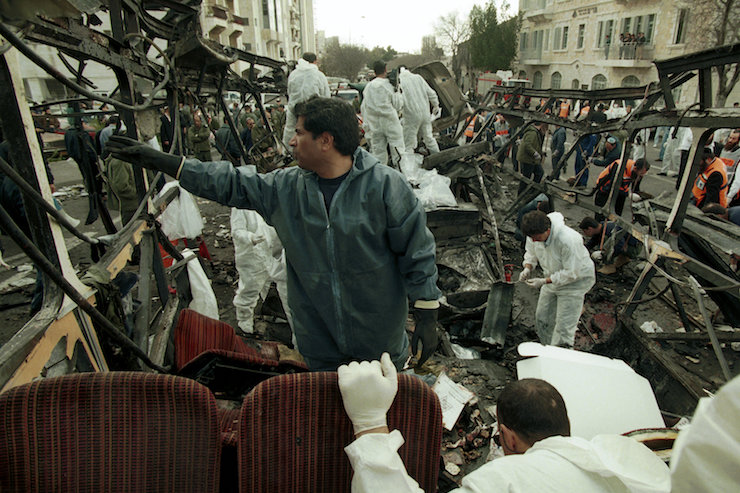
Paramedics and rescue workers at the site of a Hamas suicide bombing in Jerusalem, which killed 26 people and wounded 80 more, February 26, 1996. (Flash90)
There was another option for bringing about calm that Rabin and his advisors did not discuss: demolishing Baruch Goldstein’s home. Doing so could have deterred settler terrorists and bolstered disagreements in Palestinian society about the proper response to the massacre, thereby potentially avoiding the civil war Sprinzak warned against. What would Palestinians have stood to gain from reprisal attacks when the Israeli government was taking concrete action against the settlers?
The Israeli army is an expert when it comes to this type of collective punishment, knowing well how to carry it out — with a lot of noise, plumes of smoke that can be seen from a distance, and dramatic preparations that are recorded and distributed to media outlets around the world. Israel could have presented itself as a country that seeks to minimize conflagrations with the Palestinians, and as a state that does not differentiate when it comes to punishing Jewish and Palestinian murderers.
Israel routinely demolishes homes according to Regulation 119 of the British Mandate’s Defence (Emergency) Regulations, which allows the authorities to take over the homes of anyone who tries to harm the state through violence. Since 1967, hundreds of homes belonging to Palestinians who have been involved in violent activities against the occupation or Israeli citizens have been demolished in accordance with this regulation. Yet never has Israel demolished homes belonging to the many Jewish Israelis involved in violence against Palestinians.
We heard the legal justification for this back in 2015 from settler and Supreme Court Justice Noam Solberg, when he wrote that the “Jewish public does not need the same deterrence, which is the purpose of home demolitions. The Jewish public, in general, is deterred and not incited.”
Perhaps news of the incitement against human rights activists and journalists over the past few years has yet to reach Alon Shvut, the settlement Solberg lives in. Perhaps he has not read about the incitement against members of Peace Now during the days of the First Lebanon War, the murder of Peace Now activist Emil Grunzweig by right-wing settler Yonah Avrushmi. Solberg, it seems, did not witness the incitement by thousands of settlers against Rabin in the months leading up to the assassination.
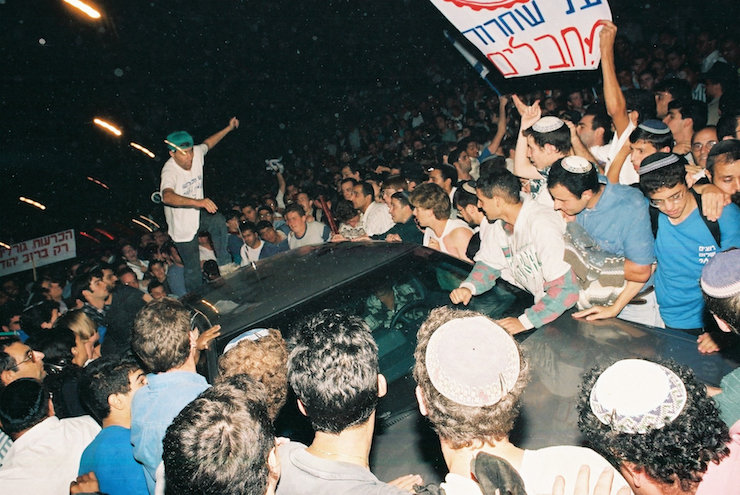
Right-wing demonstrators pound on Prime Minister Yitzhak Rabin’s vehicle during a protest against the Oslo Accords, in Jerusalem’s Zion Square, October 5, 1995. (Flash90)
The claims made by the security establishment about demolishing homes have been no less absurd, since no one has ever proven that Palestinians are actually deterred by the demolitions. Hundreds of Palestinian homes have been destroyed, yet the violent struggle for freedom has continued for over 50 years. Could it be, then, that home demolitions actually encourage terrorism?
Are Jews less deterred than Palestinians? Does the moral damage caused by collective punishment differentiate between Jews and Arabs? In a petition to the Supreme Court filed by the family of Muhammad Abu Khdeir, who was kidnapped and burned alive by Jewish settlers in July 2014, to demolish the homes of their son’s killers, Justice Elyakim Rubinstein ruled that “the demolition or sealing of a Jewish terrorist’s home, which would save lives, even that of one person, justifies the use of the regulation.” But how does one prove that the demolition of a home could save lives?
What would have happened had the Israeli government demolished the homes of the 29 terrorists from the Jewish Underground — who planned and carried out numerous attacks on Palestinian civilians, and plotted to blow up the Dome of the Rock — after they were arrested in April 1984? Would that have put an end to all Jewish terrorist activities? Could the Cave of the Patriarchs Massacre have been prevented had Goldstein known that his home was in danger? And had Rabin decided to demolish Goldstein’s home immediately after the massacre, would Yigal and Hagai Amir have considered the fate of their family’s home before going ahead with their assassination?
A version of this article was first published in Hebrew on Local Call. Read it here.
Commenti
Posta un commento