I
leader dei coloni hanno a lungo reclamizzato le zone industriali della
West Bank come fari di convivenza, dove gli israeliani lavorano a fianco dei palestinesi, fornendo loro un sostentamento
dignitoso. L'uccisione di due israeliani da parte del loro collaboratore palestinese al Barkan Industrial Park, domenica mattina, minaccia di minare questa narrativa, costringendo i sostenitori di tale partnership a difenderla .
"Non lasceremo che questo ci separi", ha detto il presidente del
consiglio regionale di Samaria Yossi Dagan, pochi minuti dopo l'attacco
terroristico che ha causato la morte di Kim Levengrond Yehezkel, 28
anni, e Ziv Hajbi, 35 anni. "La beata convivenza che si svolge qui ogni giorno continuerà", ha aggiunto.
Proprio il mese scorso Dagan ha parlato con orgoglio ai membri del
Parlamento dell'Unione Europea a Bruxelles , di Barkan dove circa la metà dei 7.200 lavoratori delle 164 fabbriche del sito
sono palestinesi,e la metà sono ebrei.
"Non c'è mai stato un attacco terroristico lì".
(Nel 2015 un palestinese ha accoltellato due guardie di sicurezza
israeliane al cancello di una zona industriale della Borsan, nella zona
settentrionale della West Bank). Anche dopo quanto è accaduto la posizione di Dagan è rimasta ferma.
Allo stesso modo, non un singolo funzionario israeliano, eletto in
Cisgiordania ,ha preso una posizione pubblica contro l'assunzione di
palestinesi nelle zone industriali.
I siti sono spesso citati dai politici di destra per confutare i piani di pace che vogliono la separazione israeliana dai
circa 3 milioni di palestinesi della Cisgiordania.
Secondo il consiglio degli insediamenti di Yesha ci sono 20 zone
industriali in tutta la Cisgiordania che danno lavoro a circa 28.000
lavoratori, di cui circa 18.000 sono palestinesi.
I sostenitori delle zone industriali sostengono che ciò dimostra che i palestinesi sono più
interessati a questo tipo di salario piuttosto che a quello grantito dall' 'impiego statale . Pertanto gli i sforzi per dividere israeliani e palestinesi in Cisgiordania
lascerebbero questi ultimi senza una fonte di rispettabile
reddito.
Gli oppositori del movimento degli insediamenti contrastano
l'affermazione sostenendo che la morsa israeliana sulle imprese
palestinesi in Cisgiordania, ne ostacola la crescita economica al punto
che molti lavoratori palestinesi sono costretti a lavorare nelle
zone industriali israeliane per ottenere salari economici vitali.
Nell'attuale governo, Dagan e altri leader dei coloni hanno trovato un
pubblico ricettivo alla loro causa, ciò ha determinato investimenti per milioni di shekel nelle zone industriali sulla Green Line.
Ciò è stato evidente anche dopo l'attacco di domenica, quando il
ministro dell'economia , Eli Cohen è arrivato a Barkan e si è
impegnato ad espandere la zona industriale di 150 dunam (37 acri),
in nome della coesistenza che unisce "sicurezza ed
interesse economico".
Mentre nessun funzionario eletto ha preso posizioni
aggressive contro l'assunzione di lavoratori palestinesi, un certo
numero di personalità dei coloni di estrema destra hanno chiesto separazione
L'ex direttore dell'Osservatorio per la pace di Yariv Oppenheimer ha
scritto su Twitter: "Non c'è coesistenza negli insediamenti. C'è un occupante e l'occupato. Capo e dipendenti. Chiunque pensi che questa sia una ricetta per la pace si sbaglia. "
L'avvocato attivista di estrema destra, Itamar Ben Gvir ha definito i commenti di Dagan a favore della coesistenza in seguito
all'attacco "errato e fuorviante".
Ha invitato i capi degli insediamenti a chiedere ai lavoratori palestinesi di "dichiarare la loro lealtà allo
stato ebraico".
In una conversazione con The Times of Israel, Ben Gvir ha riconosciuto
che nessun altro presidente del consiglio regionale o locale in
Cisgiordania aveva assunto una posizione simile, ma ha suggerito che
le loro motivazioni erano economiche, dato che dalle zone industriali
attingevano ingenti somme per i loro insediamenti. Il residente di Hebron sosteneva che molti altri nel movimento degli insediamenti avevano opinioni simili.
Yael Ben Yashar, candidato a sindaco nell'insediamento della
Cisgiordania, in Cisgiordania, ha dato il via alla linea imposta da
altri leader dei coloni e ha difeso l'occupazione dei palestinesi in
Cisgiordania.
"La maggior parte di loro è semplicemente interessata a guadagnarsi da
vivere", ha detto, respingendo l'implicazione che le azioni del
terrorista a Barkan indicano che tutti i palestinesi dovrebbero
essere banditi dalle zone industriali israeliane. Allo stesso tempo, ha riconosciuto che la pazienza è sempre più erosa .
"Vorremmo vivere in convivenza, ma ogni volta l'altra parte rompe la
nostra fiducia", ha detto il candidato ed ex funzionario municipale.
Quella "fiducia" che Ben Yashar e altri leader dei coloni sono disposti a offrire ai palestinesi a livello economico non è mai stata
elevata a livello politico.
"Non ci sarà uno stato palestinese e il modo per dissipare quel
sogno è di permettere il miglioramento della situazione economica", ha
affermato il presidente del consiglio locale di Beit Aryeh Avi Na'im
"Siamo scioccati, ma non spaventati", ha detto Yohan Cohen, un
lavoratore di Barkan e residente nell'insediamento di Bruchin nel nord
della West Bank. "Continuerò a venire a lavorare qui nella zona industriale ogni giorno con i miei amici israeliani e palestinesi".
Amjad Mughar, che ha lavorato a Barkan negli ultimi tre anni, : "Non so come potrò sostenere i miei sei figli senza questo lavoro. Non so davvero perché qualcuno ha fatto qualcosa del genere ".
Secondo Moshe Levran, che lavora come direttore delle esportazioni
presso Twitto Plus, una delle fabbriche di Barkan, "I dipendenti
palestinesi sono più sconvolti per l'incidente di quelli israeliani. Ho spiegato loro che probabilmente ci saranno più controlli,ma alla fine tutto tornerà come prima". Per i leader dei coloni Barkan è
diventato un punto di riferimento per vendere la presenza israeliana in
Cisgiordania.
I funzionari della difesa ritengono che il 23enne
assalitore, Ashraf Walid Suleiman Na'alowa, abbia agito come un "lupo
solitario", ma se spuntassero gli imitatori il tipo di separazione , che si vede nelle
zone residenziali della West Bank ,probabilmente sopraffarirà coloro che
chiedono la coesistenza sul posto di lavoro
Settler leaders insist industrial zone shooting won’t sink isle of coexistence
While some right-wing activists respond to
Barkan terror attack with calls to halt Palestinian employment at
Israeli factories, most local leaders double down on its importance
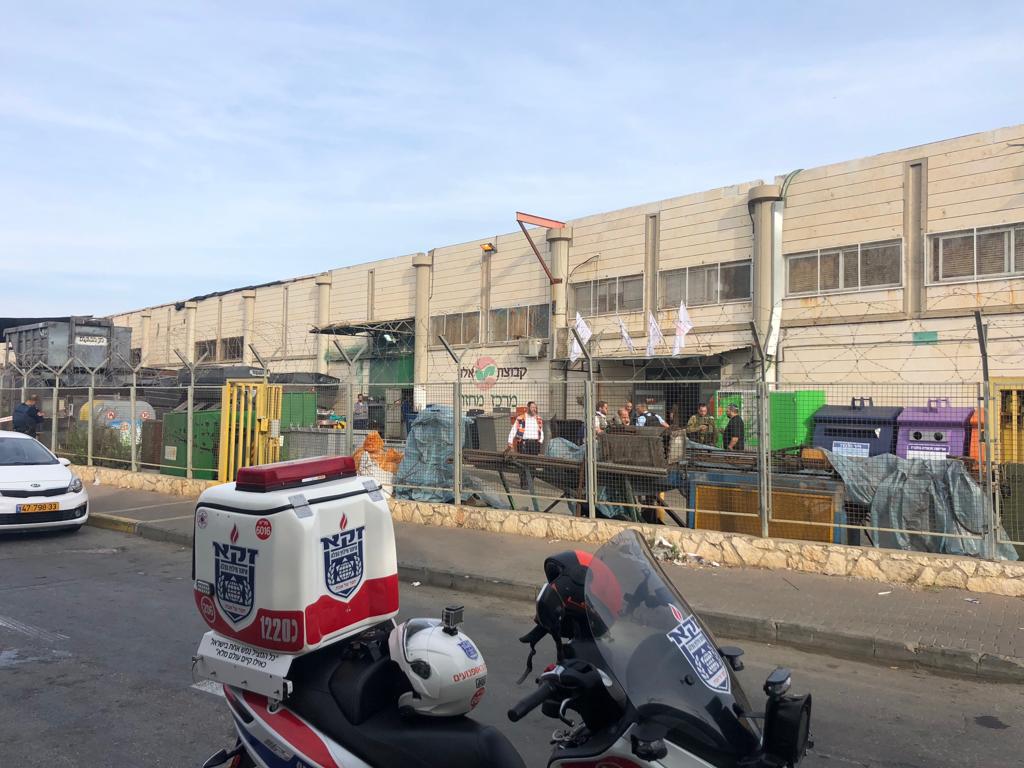
Barkan industrial zone factory where a Palestinian worker killed two Israelis and injured a third, on October 7, 2018. (Zaka)
Settler leaders have long touted West Bank industrial zones as
beacons of coexistence, where Israelis hire and work alongside
Palestinians, providing them with a decent livelihood.
But the gunning down of two Israelis by their Palestinian coworker at the Barkan Industrial Park on Sunday morning threatened to chip away at that narrative, forcing supporters of such partnership to defend the practice.
“We will not let this break us,” said Samaria Regional Council
chairman Yossi Dagan, minutes after the terror attack that claimed the
lives of 28-year-old Kim Levengrond Yehezkel and 35-year-old Ziv Hajbi.
“The blessed coexistence that takes place here every day will continue,” he added.
Kim Levengrond Yehezkel, 28 (left), and
Ziv Hajbi, 35, who were killed in a terror shooting in the Barkan
industrial zone in the West Bank, October 7, 2018 (screenshots:
Facebook)
Just last month, Dagan talked proudly to members of the European
Union Parliament in Brussels about Barkan in particular, where roughly
half of the 7,200 workers at the site’s 164 factories are Palestinian,
and half are Jewish.
“There has never been a terror attack there,” he said at the time.
(In 2015, a Palestinian stabbed two Israeli security guards at the gate
of a different northern West Bank industrial zone neighboring Barkan).
Even after Sunday’s shooting, Dagan’s stance remained firm.
Similarly, not a single elected Israeli official in the West Bank took a
public position against the hiring of Palestinians at industrial zones.
Ashraf Walid Suleiman Na’alowa, a
Palestinian man suspected of carrying out a deadly terror attack on
October 7, 2018 in the Barkan Industrial Zone in the northern West Bank.
(Courtesy)
The sites are frequently mentioned by politicians on the right in
their rebuttals of peace plans seeking Israeli separation from the West
Bank’s roughly 3 million Palestinians.
According to the Yesha settlement umbrella council, there are 20
industrial zones throughout the West Bank that employ roughly 28,000
workers, of whom some 18,000 are Palestinian.
Supporters of the industrial zones argue that the broad satisfaction
of workers there demonstrates that Palestinians are more interested in
earning respectable wages than statehood, and that efforts to divide
Israelis and Palestinians in the West Bank will only leave the latter
population without a source of a respectable income.
Samaria Regional Council chairman Yossi
Dagan arrives at the Barkan Industrial Zone factory where a terror
attack took place on October 7, 2018. (Roy Hadi)
Opponents of the settlement movement counter the claim by arguing
that Israeli limits on Palestinian businesses in the West Bank stagnate
economic growth to the point where many Palestinian workers are forced
to rely on Israeli industrial zones for viable economic wages.
In the current government, Dagan and other settler leaders have found
a receptive audience to their cause, which has led to the investment of
millions of shekels in industrial zones over the Green Line.
This was also evident after Sunday’s attack, when Economic Minister
Eli Cohen arrived at Barkan and pledged to expand the industrial zone by
150 dunam (37 acres), calling the coexistence that they help instill a
“security and economic interest.”
Far-right, left wing activists in rare agreement
But while no elected officials took the more hawkish stance against
the hiring of Palestinian workers, a number of far-right settler
personalities voiced frustration over the policy, calling for levels of
separation that those on the opposite side of the political spectrum
have long backed.
Israeli security forces search the
northern West Bank after a fatal shooting attack in Barkan Industrial
Park in the northern West Bank on October 7, 2018. (Israel Defense
Forces)
Former director of the Peace Now settlement watchdog Yariv
Oppenheimer tweeted, “There is no coexistence in the settlements. There
is an occupier and the occupied. Boss and employees. Whoever thinks this
is a recipe for peace is mistaken.”
Of all people, Oppenheimer’s words appeared to have resonated with
Tzvi Succot, the director of the far-right Otzma Yehudit organization,
who retweeted the left-wing activist’s post, saying that Oppenheimer “is
one who gets [it].”
Far-right activist-attorney Itamar Ben Gvir, meanwhile, called
Dagan’s comments in favor of coexistence following the attack “mistaken
and misleading.”
“That ‘coexistence’ blew up in Barkan today and only Yossi along with
a handful of people in the Eztion Bloc continue to mislead themselves
and the public,” Ben Gvir said.
Attorney Itamar Ben Gvir. (Yonatan Sindel/Flash90)
He called on settlement heads to conduct a “serious a follow-up” and
demand that the Palestinian workers “pronounce their loyalty to the
Jewish state.”
In a conversation with The Times of Israel, Ben Gvir acknowledged
that no other regional or local council chairman in the West Bank was
taking a similar stance, but he suggested that their motivations were
economic, given that the industrial zones draw in significant cash to
their settlements.
Moreover, the Hebron resident claimed that many others in the settlement movement held similar views.
Yael Ben Yashar, who is running for mayor in the central West Bank
settlement of Beit El toed the line set by other settler leaders and
defended the employment of Palestinians in the West Bank.
Beit El mayoral candidate Yael Ben Yashar. (Courtesy)
“The majority of them are interested in simply making a living,” she
said, rejecting the implication that the actions of the Barkan terrorist
meant all Palestinians should no banned from Israeli industrial zones.
At the same time, she acknowledged that patience for such projects may be running thin.
“We would like to live in coexistence, but every time, the other side
breaks our trust,” the candidate and former municipal official said.
That “trust” that Ben Yashar and other settler leaders have been
willing to offer Palestinians at the economic level has never been
elevated to the political level.
David Ha’ivri, who works with the Samaria Regional to bring hundreds
of international groups to the northern West Bank on tours that
regularly stop at Barkan, explained that the issue is “not with trusting
the Palestinian people but rather their leadership in the corrupt
Palestinian Authority.”
“There will not be a Palestinian state… and the way to dispel that
dream is to allow their economic situation to improve,” argued Beit
Aryeh local council chairman Avi Na’im, who suggested that national
aspirations and economic ones were inversely connected.
Israeli security forces stand at the
entrance of the Barkan Industrial Zone in the northern West Bank on
October 7, 2018. (AP Photo/Oded Balilty)
‘Palestinian employees are more distraught… than the Israelis’
As for those that will most directly be impacted by the Barkan
attack, there appeared to be widespread consensus among the industrial
zone employees — both Jews and Arabs — against altering the status quo
there.
“We are shocked, but not afraid,” said Yohan Cohen, a Barkan worker
and resident of the northern West Bank settlement of Bruchin. “I will
continue coming to work here at the industrial zone every day with my
Israeli and Palestinian friends.”
Amjad Mughar, who has been working at Barkan for the past three
years, expressed concern over what he expected to be an increase in
daily security checks of Palestinian workers, as well as the possibility
that he might lose his work permit altogether.
“I don’t know how I will be able to support my six kids without this
job. I really don’t know why someone would do something like this,”
Mughar added.
The Barkan Industrial Park next to the West Bank settlement of Ariel. (Photo by Shuki/Wikipedia CC BY-SA 3.0)
According to Moshe Levran, who works as an export manager at Twitto
Plus, one of the Barkan factories, “The Palestinian employees are more
distraught over the incident than the Israelis ones are.”
“I sat them down and explained to them that they might go through an
extra security check every day, but that will die down eventually and
things will return to normal,” he said.
For now, settler leaders are standing behind what has become a go-to talking point in selling Israeli presence in the West Bank.
Even before the two victims were pronounced dead, Dagan pointed out
that Sunday’s attack had been the first one at Barkan since the site was
established in 1982.
Israeli security forces at the scene of a
shooting attack in Barkan industrial zone in the West Bank on October
7, 2018 (Flash90)
With defense officials currently under the assumption that the
23-year-old assailant, Ashraf Walid Suleiman Na’alowa, acted as a “lone
wolf,” supporters of continued Israeli-Palestinian economic cooperation
in the West Bank appear to have little to worry about.
But if copycats spring up, calls for the type of separation that is
seen in West Bank residential areas will likely overpower those calling
for coexistence at the workplace.
Israele governo di estrema destra e opposizione 156 Israele opposizione civile e democratica 618 Sulla scia del colpo di stato giudiziario, le discussioni israeliane sul trasferimento all’estero non si fermano più ai gruppi di social media. In una lussureggiante valle dell’Italia nordoccidentale si stanno concretizzando idee di emigrazione collettiva – e iniziative simili stanno prendendo forma anche altrove Hilo Glazer 2 settembre 2023 1:19 IDT “Mentre il numero di ore di luce nella democrazia del loro paese continua a diminuire, sempre più israeliani arrivano nella valle montuosa alla ricerca di un nuovo inizio. Tra loro ci sono giovani con bambini nel marsupio, altri con bambini in età scolare, e ci sono persone con i capelli grigi come me. Un insegnante, un imprenditore tecnologico, uno psicologo, un toelettatore, un allenatore di basket. Alcuni dicono che stanno solo esplorando, ma si vergognano ancora di ammettere che stanno seriamente considerando l'opzione. Altri s...
Gaza Operazione 'Guardiano delle Mura' ARCHIVE.IS The Children in the Israel-Hamas War Who Were Killed - The New York T… They Were Only ChildrenBy Mona El-Naggar, Adam Rasgon and Mona BoshnaqMay 26, 2021 Just minutes after the war between Israel and Hamas broke out, a 5-year-old boy named Baraa al-Gharabli was killed in Jabaliya, Gaza. A 16-year-old, Mustafa Obaid, was killed in the same strike, on the evening of May.... Just minutes after the war between Israel and Hamas broke out, a 5-year-old boy named Baraa al-Gharabli was killed in Jabaliya, Gaza. A 16-year-old, Mustafa Obaid, was killed in the same strike, on the evening of May 10. Around the same time, four cousins — Yazan al-Masri, 2, Marwan al-Masri, 6, Rahaf al-Masri, 10, and Ibrahim al-Masri, 11 — were killed in Beit Hanoun, Gaza. “It was devastating,” said Mukhlis al-Masri, a cousin. “The pain for our family is indescribable.” They Were Only Children By Mona El-Naggar, Adam Rasgon and Mona Boshnaq May 26, 2021 Whe...
I CONFINI D’ISRAELE SECONDO LA BIBBIA - Limes 1. I CONFINI DELLA TERRA DI ISRAELE SPESSO richiamano l’attenzione in base all’uso geopolitico e storico che se ne fa. Gli stereotipi sui confini israeliani, generalmente, seguono due binari che definiscono lo spazio di Israele in maniera… limesonline.com Il testo sacro offre due diverse definizioni dello spazio israeliano, dalle dimensioni completamente diverse. L’origine e il senso teologico di queste versioni di Erets Yisra’el si offrono a vari usi geopolitici. Tra yerushah e achuzah . L’opinione del rabbino Rav Ovadya. di Pierpaolo Pinchas Punturello ARTICOLI , Israele , Palestina , religioni , Medio Oriente 1. I CONFINI DELLA TERRA DI ISRAELE SPESSO richiamano l’attenzione in base all’uso geopolitico e storico che se ne fa. Gli stereotipi sui confini israeliani, generalmente, seguono due binari che defi...
Israele e identità ebraica laica e religiosa articolo completo qui Traduzione sintesi I sraele può essere lo stato meglio difeso al mondo, ma l'esistenza del suo popolo si basa su un ethos di paura costante Nel suo famoso manuale per i governanti, dedicato a Lorenzo di Medici, Niccolò Machiavelli consigliò al suo principe di imparare come suscitare amore e paura nei suoi sudditi. Essere amati e temuti allo stesso tempo era il modo migliore per esercitare il potere, ma se si deve scegliere meglio essere temuti. La paura (instillata negli altri) è senza dubbio l'emozione più apprezzata dai tiranni che la usano per costruire i loro regimi. Nella sua breve storia Israele è stato coinvolto in circa 10 conflitti o guerre militari e in innumerevoli operazioni che hanno incluso bombardamenti, attacchi aerei e incursioni nel territorio. Sebbene Israele non sia l'unico paese ad essere coinvolto in conflitti prolungati , è tra i pochi stati che hanno intrapreso un conflitto ar...




 Just last month, Dagan talked proudly to members of the European
Union Parliament in Brussels about Barkan in particular, where roughly
half of the 7,200 workers at the site’s 164 factories are Palestinian,
and half are Jewish.
Just last month, Dagan talked proudly to members of the European
Union Parliament in Brussels about Barkan in particular, where roughly
half of the 7,200 workers at the site’s 164 factories are Palestinian,
and half are Jewish. The sites are frequently mentioned by politicians on the right in
their rebuttals of peace plans seeking Israeli separation from the West
Bank’s roughly 3 million Palestinians.
The sites are frequently mentioned by politicians on the right in
their rebuttals of peace plans seeking Israeli separation from the West
Bank’s roughly 3 million Palestinians.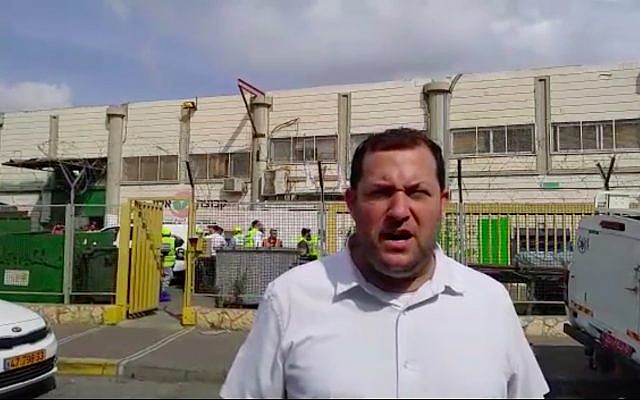 Opponents of the settlement movement counter the claim by arguing
that Israeli limits on Palestinian businesses in the West Bank stagnate
economic growth to the point where many Palestinian workers are forced
to rely on Israeli industrial zones for viable economic wages.
Opponents of the settlement movement counter the claim by arguing
that Israeli limits on Palestinian businesses in the West Bank stagnate
economic growth to the point where many Palestinian workers are forced
to rely on Israeli industrial zones for viable economic wages.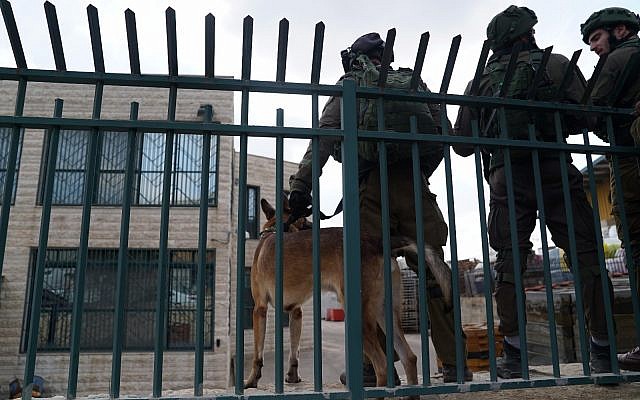 Former director of the Peace Now settlement watchdog Yariv
Oppenheimer tweeted, “There is no coexistence in the settlements. There
is an occupier and the occupied. Boss and employees. Whoever thinks this
is a recipe for peace is mistaken.”
Former director of the Peace Now settlement watchdog Yariv
Oppenheimer tweeted, “There is no coexistence in the settlements. There
is an occupier and the occupied. Boss and employees. Whoever thinks this
is a recipe for peace is mistaken.”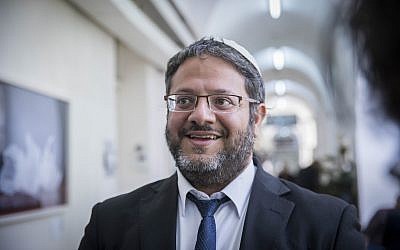 He called on settlement heads to conduct a “serious a follow-up” and
demand that the Palestinian workers “pronounce their loyalty to the
Jewish state.”
He called on settlement heads to conduct a “serious a follow-up” and
demand that the Palestinian workers “pronounce their loyalty to the
Jewish state.” “The majority of them are interested in simply making a living,” she
said, rejecting the implication that the actions of the Barkan terrorist
meant all Palestinians should no banned from Israeli industrial zones.
“The majority of them are interested in simply making a living,” she
said, rejecting the implication that the actions of the Barkan terrorist
meant all Palestinians should no banned from Israeli industrial zones.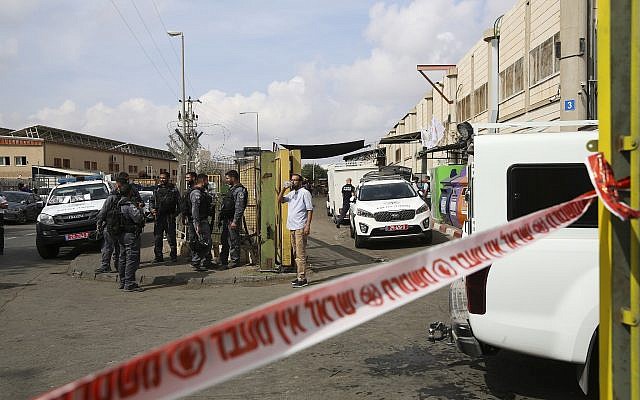
 According to Moshe Levran, who works as an export manager at Twitto
Plus, one of the Barkan factories, “The Palestinian employees are more
distraught over the incident than the Israelis ones are.”
According to Moshe Levran, who works as an export manager at Twitto
Plus, one of the Barkan factories, “The Palestinian employees are more
distraught over the incident than the Israelis ones are.”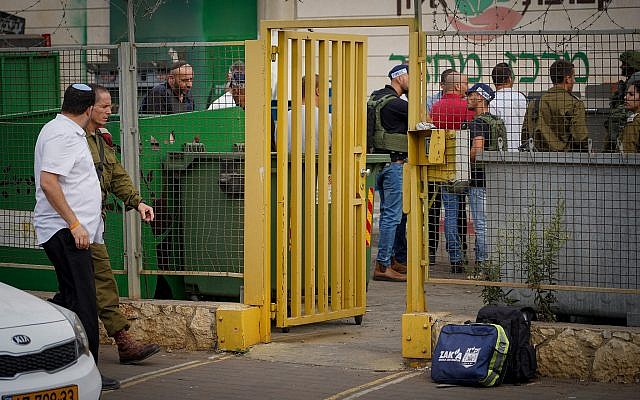 With defense officials currently under the assumption that the
23-year-old assailant, Ashraf Walid Suleiman Na’alowa, acted as a “lone
wolf,” supporters of continued Israeli-Palestinian economic cooperation
in the West Bank appear to have little to worry about.
With defense officials currently under the assumption that the
23-year-old assailant, Ashraf Walid Suleiman Na’alowa, acted as a “lone
wolf,” supporters of continued Israeli-Palestinian economic cooperation
in the West Bank appear to have little to worry about.
Commenti
Posta un commento